We live in an era of engineered obsolescence. From fast-fashion garments that lose their shape after three washes to mass-market furniture designed to chip during your next move, modern consumption has become a hamster wheel.
Most people remain trapped on this wheel because they calculate cost strictly at the point of transaction.
But those who understand power, prestige, and eventual legacy operate under a completely different framework: The Law of Capital Efficiency. They do not buy things to solve a temporary problem; they acquire assets to permanently claim a standard of living.
If you are navigating the transition from a stable professional to an architect of long-term leverage, your philosophy on material goods must shift. You must stop shopping, and start building an ecosystem.
Here are the three foundational rules of the “Old Money” mindset that you can implement today, regardless of your current net worth.
Rule 1: Eliminate the Mid-Tier Trap
The most expensive financial trap for an ambitious professional is the “accessible luxury” market. These are products priced at a premium to appeal to the middle class, yet constructed with the exact same mass-production methods as budget retail. They feature loud, aggressive branding to distract from cheap hardware and synthetic materials.
True discretion demands that you skip the mid-tier entirely. It is infinitely better to own one flawless, understated heritage piece than five flashy items that scream for attention. Wealth speaks in whispers; it is fast fashion that has to yell.
- The Daily Armor: When upgrading your aesthetic, look past the trend-chasing labels found in crowded malls. Instead, opt for structured, classic pieces that prioritize clean lines and excellent tailoring over massive logos. A crisp, flawlessly tailored trench coat or a sharp wool-blend coat from an iconic house like Michael Kors does not declare its price tag—it declares its presence through a sharp silhouette, timeless tailoring, and structural weight.
Rule 2: Demand Over-Engineered Utility
When an item is over-engineered, it means its physical threshold for performance vastly exceeds any stress you could reasonably put it through. It is an intentional rejection of the fragile.
When you sit at your workspace, every object within your field of vision should reflect absolute stability. If your tools feel temporary, your professional output will follow suit. Elevate the baseline of your daily environment.
- The Command Center: Your desk shouldn’t just be a place where you work; it should be an anchor of executive authority. Look at the institutions that hold a monopoly on the private offices and boardrooms of the world. They don’t use flashy, ergonomic fads. They invest in structural permanence. Bringing an iconic piece of industrial design like a Herman Miller Aeron Chair into your office immediately alters your psychology. It is an over-engineered asset built for decades of focus, forcing you to approach your daily operations like a statesman rather than a clerk.
Rule 3: The “Buy It For Life” Cost Equation
Let us look at the mathematics of true luxury. A mass-produced nylon or synthetic blend travel bag costs $150 and structurally degrades within 24 months of frequent commuting, requiring a replacement. Over a fifteen-year career, you will easily spend over $1,100 on items that looked ordinary and worn down every single day they were in your possession.
Conversely, investing a premium upfront into an artisan-crafted leather asset or classic, hard-sided luggage grows more beautiful with every passing year, carries an unmistakable aura of intent, and is eventually handed down.
The wealthy do not buy expensive things because they have money to burn; they buy them because they cannot afford the compounding waste of buying cheap things repeatedly.
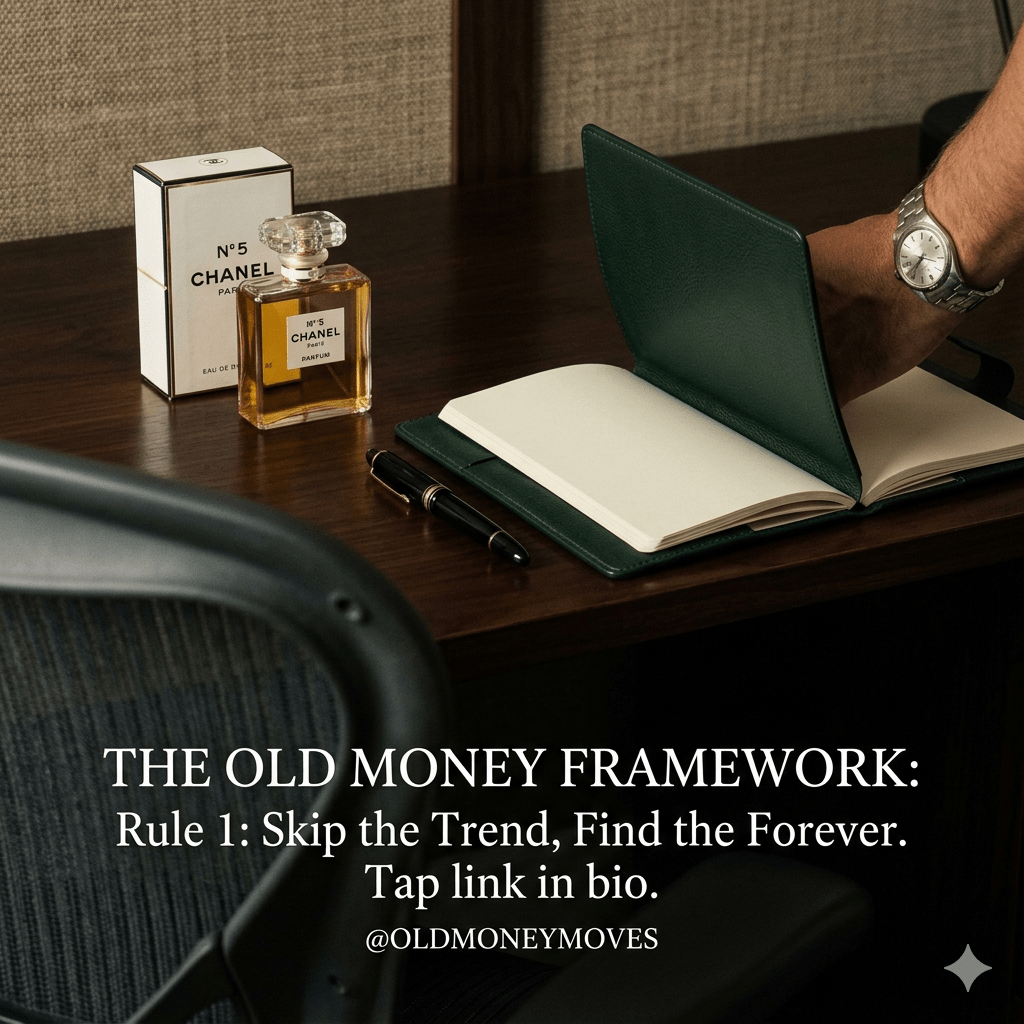
- The Professional Presentation: Even your subtle, personal grooming cues should reflect this shift. Moving away from synthetic, sweet fragrances to timeless, woody, and complex scent profiles—such as the masterfully balanced, crisp compositions found in Chanel’s masculine and unisex lines—completes the infrastructure. It is an invisible signature of discipline.
The Shift Starts Now
Old Money Moves was not built to track temporary trends or review the flash-in-the-pan consumer goods of the week. This platform is a masterclass in editing your life down to what matters: durability, discretion, and design that outlasts its creators.
Every investment you make in your personal presentation, your workspace, and your mindset is a brick laid for the infrastructure of your future legacy. Choose your materials wisely.
